High school clubs
A year of computer science, inside your school.
Not a lunchtime activity, and not an after-school club that fizzles out by June. One academic year, timetabled, taught by mentors, ending in a credential anyone can check.
The shape of it
One academic year, eighteen sessions, inside your own timetable.
A club is mentorship with a syllabus attached, not a syllabus with mentorship attached.
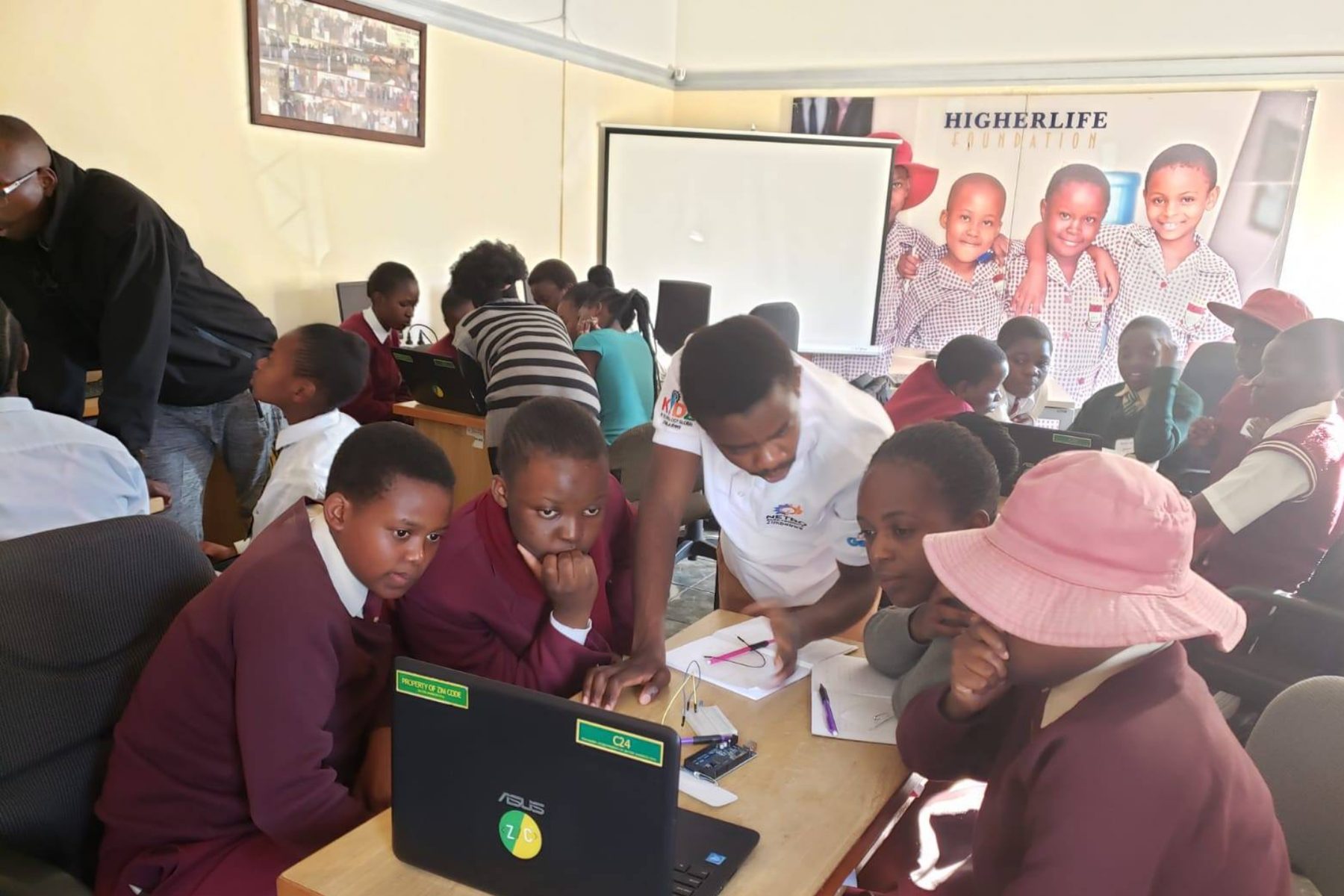
Most of a session is spent making something and then having it looked at by somebody who has already made it. The teaching happens in that second half.
- Who it is for
- Any student at a partner school. No entry test and no prior coding. Curiosity and turning up are the requirements.
- What you do
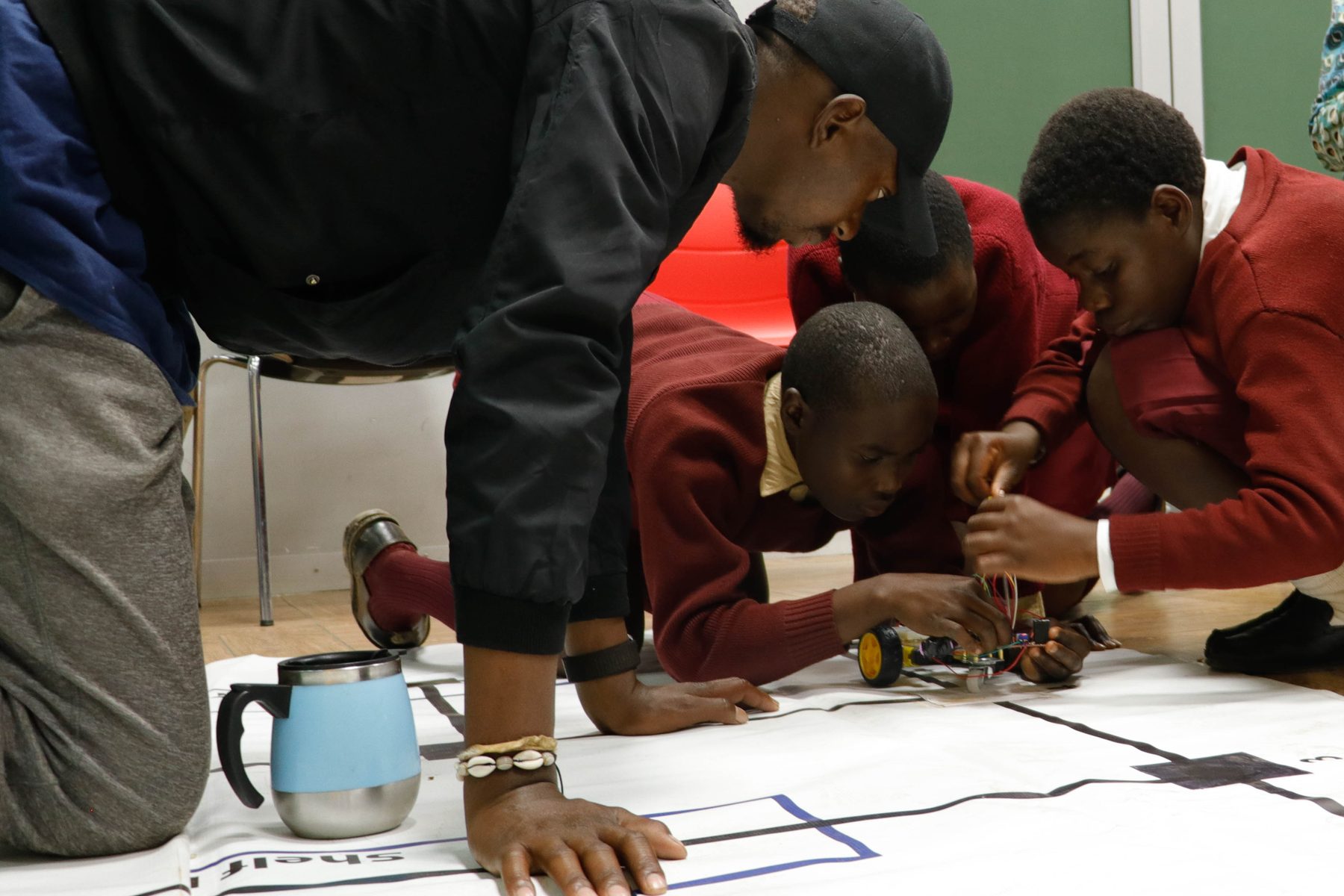
- Programming foundations in Python, then hardware, group projects and a final build. The robot in the photograph above is a real club project.
- Who teaches
- A trained mentor and a teaching assistant, usually somebody who came through the programme themselves a year or two ago.
- How it is marked
- On Poseidon, the same platform our university-level course runs on. Feedback comes back in days rather than at the end of term.
- What it costs you
- Nothing. Clubs are funded through the partnership with your institution. No student pays a fee to join one.
- What you leave with
- A certificate anyone can verify without asking us, and the alumni network afterwards. See how verification works.
The year
What happens, and when.
Foundations
Python from nothing. Variables through to functions and data structures, with exercises marked and returned between sessions.
Making things
Hardware, sensors and small robots, working in pairs, because explaining your code to somebody else is where it stops being copying.
A build of your own
A project you choose, presented to the club. This is the piece that goes on a university application.
Where we run
Find your school.
If it is listed, your school already has a member of staff running the club, and they are who to ask.
No clubs listed yet.
Clubs appear here once a partner institution is confirmed and the first cohort starts. We do not list schools we are only in conversation with.
Bring one to your schoolFor parents and teachers
The questions you are actually asking.
If you are a parent or guardian
- Is it safe
- Sessions run in the open on school premises with school staff present. Mentors are checked before placement and do not contact students privately. Our safeguarding policy.
- Who do I speak to
- Eric Khumalo, Founder and Designated Safeguarding Lead. safeguarding@emziniwecode.com, +1 415 937 7491 You do not have to go through a form to raise a concern.
- What does it cost
- Nothing. No fee, no kit to buy, no trip to pay for.
- Will it affect their schoolwork
- Eighteen timetabled sessions across the year, most of them in the first two terms so the club is out of the way before examinations. We make no claim about examination results, because we hold no evidence for one.
- What do you hold about my child
- For club members, counts only, no names. Consent paperwork stays with the school and never reaches us. What we hold.
If you teach at the school
- What you would take on
- Sponsoring the club: a room, a regular slot, and being our point of contact. You do not have to teach it or know how to code.
- What you get
- Curriculum, mentors, assessment and certificates, all maintained by us. No preparation lands on your staff.
- What it costs the school
- Set per partnership and discussed before anything is signed. A conversation, not a price list.
- How to start one
- One message. If a club fits, we visit. The full arrangement.
Next step
No club at your school yet?
A club needs one member of staff willing to sponsor it. That is usually the whole obstacle. Tell us who to speak to.