
Emzini means the house. Emzini weCode is the house of code.
We could have called it an academy. Academies have intakes and graduations, and a graduation is a door that shuts behind you. We wanted the opposite: somewhere you join and then do not leave.
It started in a library
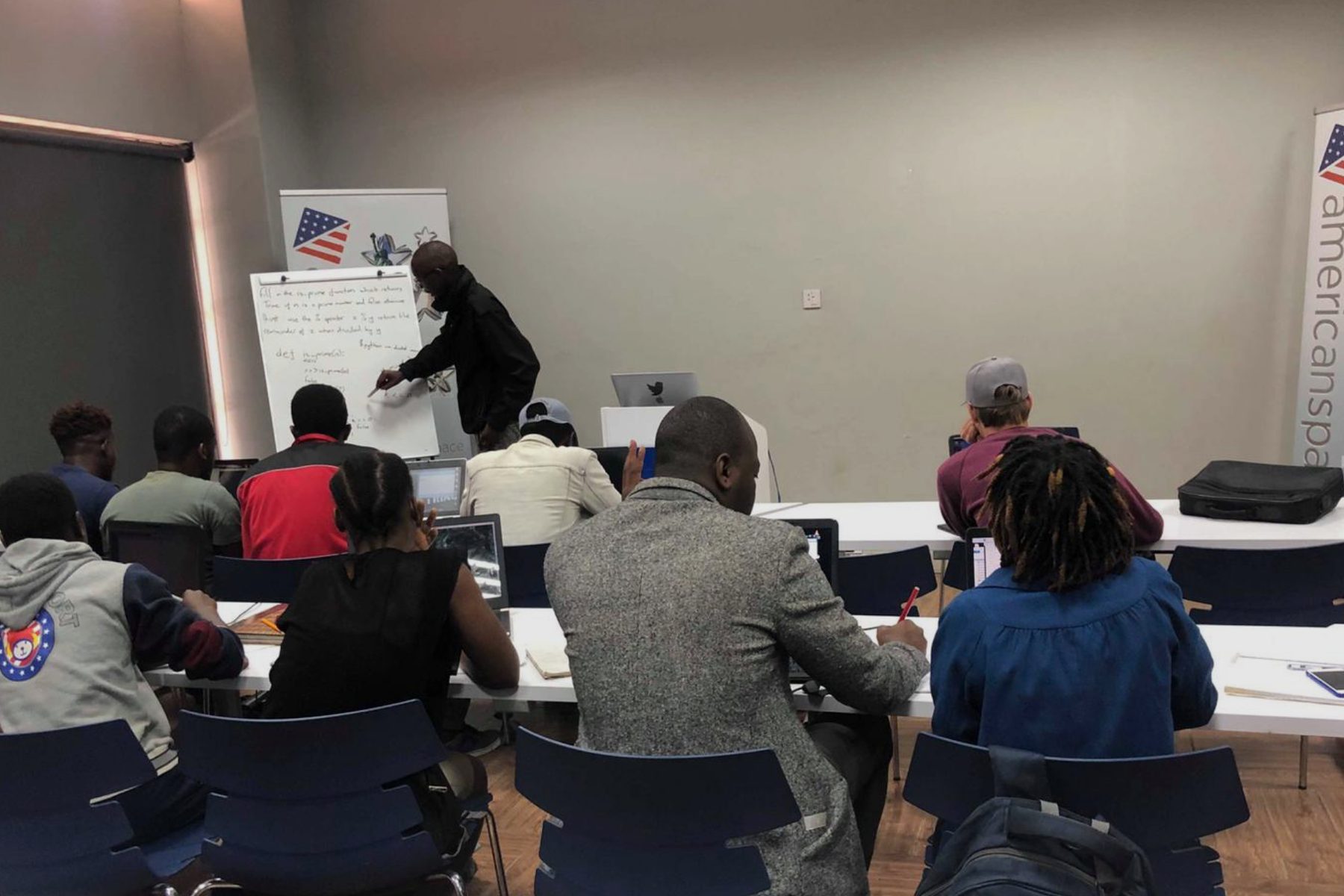
The first classes ran in Bulawayo, in a room at the Public Library, and later through the American Space at NUST. There was no platform, no curriculum repository, no grading system. There was a room, a projector when it worked, and students who came back the following week.
What we learned in that room is the thing the whole organisation is now built around: the syllabus is not the hard part. Anyone can find a good syllabus. What is hard is the culture, the expectation that you will struggle and continue anyway, and the presence of someone slightly further along who has already struggled with exactly the thing that is defeating you.
Then it had to scale
Going online was not a strategy, it was arithmetic. One room in Bulawayo holds thirty people. There were more than thirty people who wanted to learn, and most of them were not in Bulawayo.
Scaling a room is easy. Scaling the culture of a room is not, and that is where most online courses quietly fail. A video and a quiz is not mentorship. Our answer was to keep the mentorship and industrialise everything around it, which is why we ended up writing our own grading platform instead of buying one.
The rule that follows from the name
If it is a house, then nobody is a customer, and you do not stop belonging when you stop paying. Alumni teach. Teaching assistants were students two cohorts ago. The people who finish come back, and that is not a nice-to-have, it is the staffing model.
It also means the record of you here is yours to run. You claim your profile, you choose what it says, and you can change it when your life changes. People move jobs and countries; a directory that only the subject can edit is the only kind that stays true.